- Topics 1573
- Industrial 59
- Troubleshooting Guides 32
- Restaurant Management 144
- Bar Management 70
- Catering Tips 44
- Bakery Management 44
- Food Trucks & Concessions 39
- Advertising & Marketing 41
- Eco-Friendly Tips 13
- Facility Layout & Design 47
- Coffee Shop Tips 32
- Installation & Maintenance 63
- Janitorial & Pest Control 34
- Safety & Sanitation 122
- Startup Tips 110
- Menu Design 11
- Kitchen & Cooking Tips 108
- Hospitality Management 26
- Pizza & Sandwich Shop Tips 21
- Smallwares 42
- Food Prep 103
- Tabletop Items 21
- Disposables 28
- Calculators & Tools 7
- Consumables 77
- Warewashing & Laundry 22
- Cooking Equipment 107
- Food Storage & Refrigeration 57
- Beverage Equipment 43
- Office Supplies 6

Types of Countertop Warmers, Soup Kettles, and Rethermalizers
Last updated on May 1, 2026Countertop warmers play a critical role in maintaining product quality, streamlining service, and ensuring compliance with food safety standards. The right warming solution can reduce waste, improve ticket times, and support consistent menu execution. Understanding how different countertop warmers function and where they perform best helps operators align equipment choices with their menu and service demands. Below, we break down the practical considerations that separate underperforming setups from efficient, revenue-supporting commercial kitchen equipment.
Shop All Countertop Food Warmers
Food warmers are commercial kitchen appliances designed to hold cooked food at safe, ready-to-serve temperatures without continuing the cooking process. They play a central role in hot holding, allowing kitchens to prepare items ahead of service while maintaining consistency across orders. By keeping food above the temperature danger zone of 40 degrees Fahrenheit to 140 degrees Fahrenheit, the units support HACCP-based food safety practices and help limit bacterial growth. In day-to-day operations, food warmers ensure that dishes remain safe, stable, and service-ready during peak periods.
What Are Countertop Food Warmers Used For?
Food warmers are used to maintain food quality and safety between the point of cooking and the point of service. Their versatility makes them a standard piece of equipment across many foodservice formats.
- Holding Cooked Proteins: Keeps items like roasted meats or fried chicken at consistent serving temperatures, preventing cold spots and reducing the need for batch re-firing.
- Maintaining Soups, Sauces, and Chili: Provides steady, even heat so liquids stay hot and ready for portioning without scorching or separating.
- Supporting Buffet and Self-Serve Lines: Ensures multiple dishes remain within safe temperature ranges over extended holding periods, which is critical for guest safety and compliance.
- Staging Food for Catering: Allows operators to prepare in advance and hold items at the correct temperature during transport or before service begins.
- Keeping Side Dishes Service-Ready: Prevents foods like rice, pasta, or vegetables from cooling or drying out while waiting to be plated.
- Serving Concession-Style Items: Maintains products like nacho cheese or hot toppings at a stable temperature, reducing waste and improving product consistency over time.
Countertop food warmer types include several distinct unit designs, each built to hold specific food categories at safe serving temperatures. Understanding how each type operates helps operators match equipment to menu structure, service style, and volume requirements.
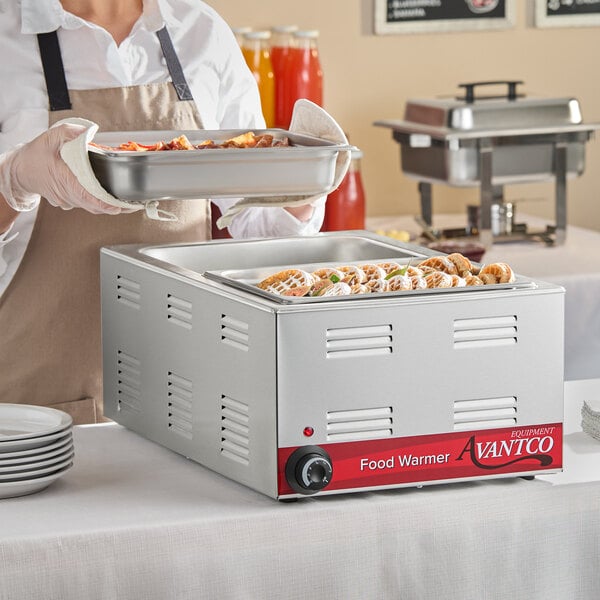
1. Bain Marie Warmers
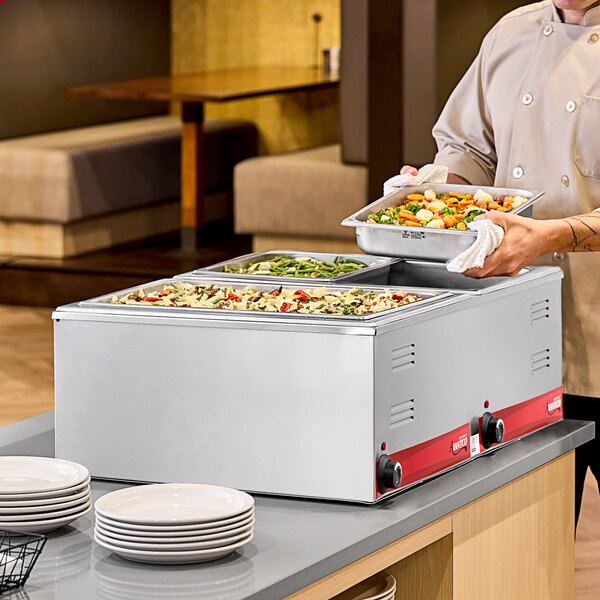
Bain marie warmers are countertop units that use a heated water bath to gently transfer heat to food pans, creating consistent, moist holding conditions. This indirect heating method reduces the risk of scorching or drying out delicate items, making it a staple for hot holding on serving lines. They are commonly used in buffets, cafeterias, and prep stations where multiple dishes need to be held simultaneously. Operators can configure them with various pan sizes to support flexible menus.
- Moist heat via water bath
- Multi-pan holding capability
- Ideal for buffets and hot lines
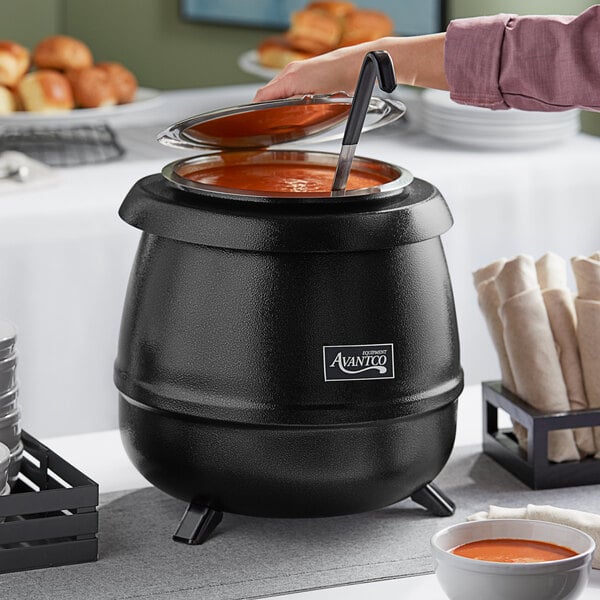
2. Soup Kettle Warmers
Soup kettle warmers are specialized countertop units designed to hold and serve liquids like soups, stews, chili, and sauces at stable temperatures. The best soup kettle warmers use controlled, even heat to prevent burning at the bottom while maintaining a consistent serving temperature throughout. Their compact, round design makes them easy to place on counters or self-serve stations, especially in delis and cafes. Many models include hinged lids and ladles for efficient service.
- Designed for liquid foods
- Even heat distribution
- Common in delis and self-serve setups
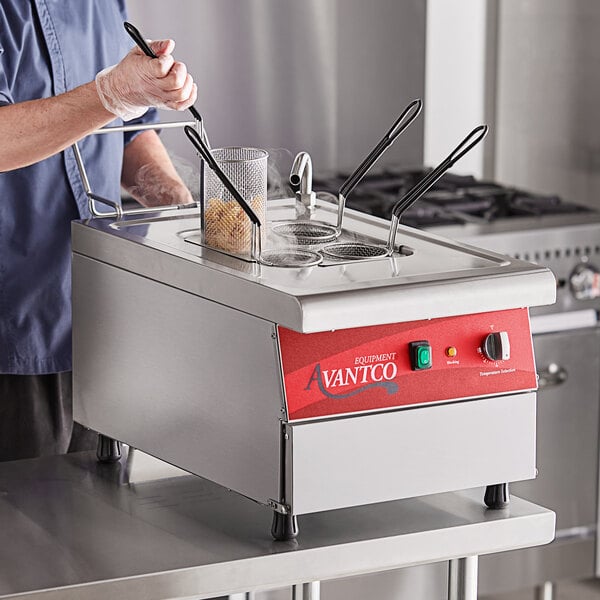
3. Rethermalizers
Rethermalizers are high-performance units built to rapidly bring pre-cooked, chilled food back to safe serving temperatures. Unlike standard warmers, they are engineered for speed and temperature recovery, making them essential in cook-chill systems and high-volume operations. These units help kitchens maintain throughput without sacrificing food safety, especially during peak service windows. They are often used in institutional settings, commissaries, and large-scale kitchens.
- Rapid reheating of chilled foods
- Supports cook-chill workflows
- Built for high-volume output
Countertop food warmers are best used in commercial settings where cooked food needs to be held safely and served consistently without slowing down operations. The ideal application depends on space constraints, service style, and volume, with different warmer types aligning to specific operational demands.
- Food Trucks and Mobile Kitchens: Compact countertop warmers with lower wattage outputs fit tight prep areas and limited power availability. They allow operators to hold key menu components hot without overloading generators or sacrificing valuable workspace.
- Delis and Cafeterias: Soup kettles provide controlled, even heating for liquids like soups, chowders, and sauces. These units are optimized for frequent ladling, keeping contents at a consistent temperature without scorching.
- Buffets and Self-Service Stations: Countertop warmers allow multiple dishes to be held within reach of guests while maintaining safe serving temperatures. This setup supports steady traffic flow and reduces the need for constant staff intervention.
- High-Volume Kitchens and Batch Cooking Operations: Rethermalizers are built to safely bring pre-cooked, chilled foods back up to serving temperature quickly. This makes them a strong fit for operations that rely on cook-chill systems or need to execute large volumes with tight timing.
- Concession Stands and Grab-and-Go Counters: Well-suited for holding high-demand items like nacho cheese, chili, or hot toppings throughout extended service windows. Consistent heat output helps maintain product quality while minimizing waste during slower periods.
Food warmer purchasing considerations focus on selecting a unit that aligns with menu demands, service flow, and kitchen constraints. The right choice balances performance, capacity, and ease of operation to support consistent hot holding without creating bottlenecks or added labor.
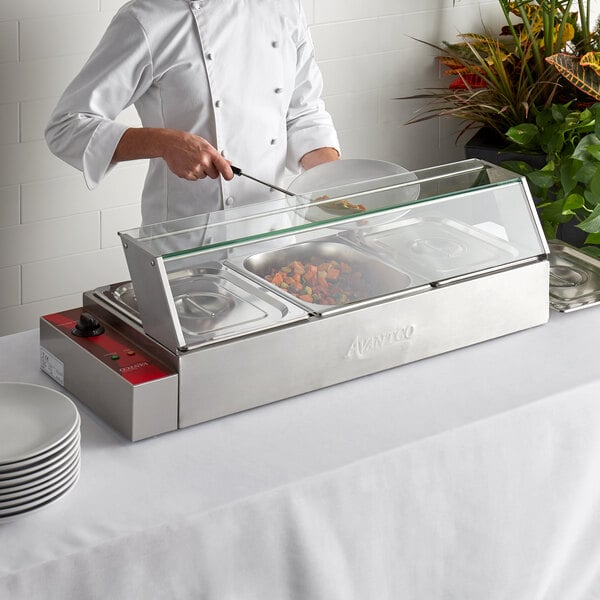
- Capacity: Determines how much food the unit can hold at one time, typically measured in pan count or total volume. Operators should choose equipment that factors in both average and peak service demand to avoid overcrowding or frequent batch turnover.
- Pan Configuration and Layout: Refers to the size and arrangement of food pans the unit accommodates. Flexible configurations allow kitchens to adjust for different menu items, while fixed layouts may limit versatility but improve consistency.
- Control Type: Infinite controls offer a simple low-to-high heat range, while thermostatic controls regulate to a set temperature. For precision and food safety consistency, thermostatic systems are generally preferred in higher-volume or compliance-sensitive environments.
- Recovery Time: Indicates how quickly the warmer returns to its set temperature after being opened or refilled. Faster recovery supports steady service during rush periods and helps maintain safe holding conditions.
- Electrical Requirements: Includes voltage, wattage, and plug type, all of which must align with the facility's infrastructure. Higher-powered units heat more efficiently but may require dedicated circuits or limit placement options.
- Cleaning and Ongoing Maintenance: Impacts labor costs and long-term usability, especially in high-turn environments. Units with removable pans, smooth interiors, and accessible components reduce cleaning time and help maintain sanitary conditions.
Wet Heat vs Dry Heat
Wet heat and dry heat are the two primary methods food warmers use to hold food at safe serving temperatures, each suited to different menu applications. Wet heat warmers use water or steam to transfer heat, which helps retain moisture and prevents foods like vegetables, rice, and proteins from drying out during extended holding. Dry heat warmers rely on heated air or direct contact, making them better suited for items that need to maintain a firmer texture, such as baked goods or fried foods.
The tradeoff is between control and moisture. Wet heat is more forgiving for delicate items, while dry heat reduces the risk of sogginess but requires closer monitoring. Selecting the right method depends on how long items will be held and the texture operators need to preserve at the point of service.
Common countertop food warmer mistakes to avoid include errors like poor capacity planning and neglecting basic maintenance practices that impact both food safety and equipment performance. These issues often show up during peak service, where small missteps can lead to temperature loss, product waste, or damaged equipment.

- Using a Warmer to Heat Cold Food: Food warmers are designed for holding, not cooking or reheating. Placing cold food directly into a warmer can keep it in the temperature danger zone too long, increasing the risk of bacterial growth and violating food safety standards.
- Overfilling Beyond Recommended Levels: Packing too much product into a pan restricts heat circulation and leads to inconsistent temperatures. This often results in hot edges and cold centers, especially during high-demand service periods.
- Letting Water Levels Run Too Low: Steam-based warmers rely on adequate water to transfer heat effectively. Allowing the reservoir to dry out can damage heating elements and cause temperature drops that affect food quality.
- Sizing Equipment Strictly for Peak Volume: Selecting a unit based only on maximum demand can lead to underutilization during slower periods. Oversized warmers may operate inefficiently and take longer to stabilize, making it harder to maintain consistent holding conditions.
- Failing to Monitor and Verify Holding Temperatures: Many operators assume a warmer is performing correctly once it's turned on, but thermostats can drift out of calibration over time. Without regular temperature checks using a calibrated thermometer, food may be held below safe hot-holding thresholds, creating food safety risks and quality issues that aren't immediately visible during service.
When properly matched to the operation, countertop food warmers stabilize workflow, protect product quality, and reduce unnecessary rework during peak periods. Details like heat type, recovery speed, and capacity have a direct impact on consistency at the point of service, especially in high-volume or fast-turn environments. By evaluating these factors with a clear understanding of how food moves from prep to plate, operators can make informed decisions that support both efficiency and compliance.
Related Resources

September 2026 WebstaurantStore Coupon Code
Welcome September with fresh savings at WebstaurantStore! As the seasons change and your business prepares for the months ahead, now is a great time to replenish essential supplies and upgrade the equipment that keeps your operation running smoothly. Shop the featured deals below, and enter coupon code COZY26 at checkout to save up to 20% on your purchase. Start the new season with more in your budget and less on your shopping list! Looking to save even more? Check out the new Webstaurant Rewards® Visa Business Card ! Sign up for a new card today and start earning rewards on every WebstaurantStore purchase, and save on a WebstaurantPlus subscription. Use the code COZY26 for the items below to score great deals on restaurant disposables! Fro
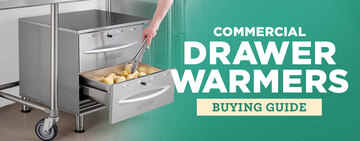
A Guide to Commercial Drawer Warmers
Commercial drawer warmers function as a buffer between cooking and service, allowing kitchens to stage items, manage fluctuating ticket times, and maintain product quality during peak periods. From quick-service lines to full-service kitchens, these units support everything from holding proteins and sides to proofing dough. Understanding how drawer warmers work and how to select and use them effectively directly impacts food safety compliance , operational efficiency, and guest satisfaction. Below, we break down the practical considerations operators need to evaluate before integrating a drawer warmer into their workflow. Shop All Warming Drawers Use the following links to explore the different features of warming drawers: What Is a Drawer
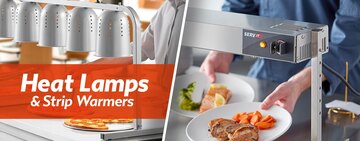
Heat Lamps and Strip Warmers
Keeping hot food hot is an ongoing struggle in a commercial kitchen. It's not just a customer service issue, it's also a food safety issue. When hot food starts to cool down, it can enter the danger zone (40 degrees to 135 degrees Fahrenheit), the temperature range that is most hospitable to the bacteria that cause foodborne illness. Thankfully, many types of food-warming equipment can help restaurant owners combat this issue. We'll walk you through the features of commercial heat lamps and strip warmers to guide you in your purchasing decision. Choosing the Best Food Warmer for Your Restaurant Both heat lamps and strip warmers are effective at keeping food hot in different applications. Heat lamps are ideal for front-of-house food displays
Join Our Mailing List
Receive coupon codes and more right to your inbox.