
- Topics 1587
- Industrial 59
- Troubleshooting Guides 32
- Restaurant Management 144
- Bar Management 70
- Catering Tips 46
- Bakery Management 47
- Food Trucks & Concessions 44
- Advertising & Marketing 41
- Eco-Friendly Tips 13
- Facility Layout & Design 47
- Coffee Shop Tips 32
- Installation & Maintenance 63
- Janitorial & Pest Control 34
- Safety & Sanitation 123
- Startup Tips 111
- Menu Design 11
- Kitchen & Cooking Tips 105
- Hospitality Management 26
- Pizza & Sandwich Shop Tips 28
- Smallwares 42
- Food Prep 103
- Tabletop Items 21
- Disposables 28
- Calculators & Tools 7
- Consumables 76
- Warewashing & Laundry 22
- Cooking Equipment 105
- Food Storage & Refrigeration 58
- Beverage Equipment 43
- Office Supplies 6

Refrigerators and freezers are staples in any commercial kitchen. Whether you manage a small mom-and-pop shop, a five-star restaurant, or a large-scale catering company, these appliances provide a temperature-controlled environment for storing ingredients and prepared dishes. They help you uphold food safety standards while providing ample storage space to keep your kitchen organized, both of which are crucial in a fast-paced industry. We'll outline the different types of commercial refrigerators and freezers, highlighting what sets them apart to help you find the right fit for your business.
Shop All Commercial Refrigeration Equipment
Use the following links to explore the different types of commercial refrigerators and freezers:
Whether you're in the market for a refrigerator or freezer, commercial refrigeration equipment comes in all different shapes, sizes, and configurations. Some models are designed for quick and convenient access, making them ideal for busy kitchens where speed is of the essence. Other units are built with bulk storage in mind, offering an ideal solution for kitchens that prepare large batches of food. The type of kitchen you operate and the specific foods on your menu will play a significant role in determining which unit is best suited for your needs.

1. Reach-In Refrigerators and Freezers
When it comes to reach-in refrigerators and freezers, your two main options are single-door models and multiple-door models. Single-door models are perfect for storing prepared meats, produce, and garnishes that you plan to use throughout the day, while multi-door units are ideal for storing ingredients or prepared items in bulk.
Both types function like a standard residential unit, offering built-in shelves for efficient organization and large doors that swing open as needed. The upright design of reach-in refrigerators and freezers fits in most commercial spaces, and in an ideal kitchen layout, they would be located in or near the prep area or production line for easy access to ingredients and supplies.
- Best for: Standard storage tasks
- Restock: From walk-in cooler or freezer weekly or as needed
2. Roll-In Refrigerators and Freezers
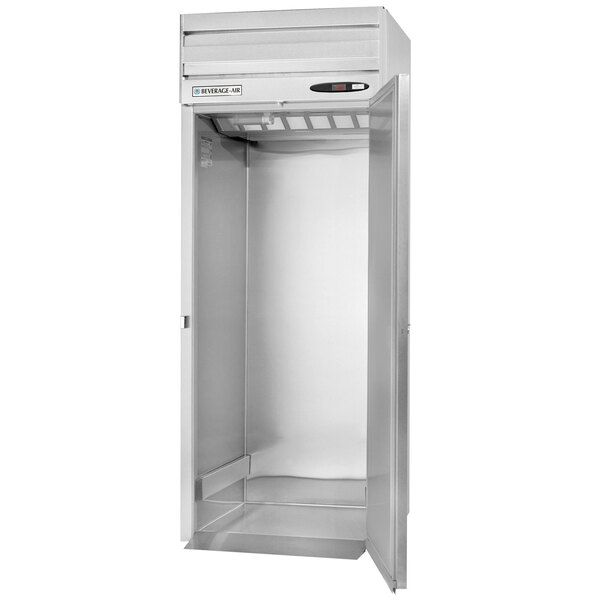
Roll-in refrigerators and roll-in freezers are specifically designed to accommodate wheeled food racks, which can be easily rolled in and out of the unit. They use built-in ramps for effortless loading, saving time and reducing physical strain on your employees. Roll-in units are particularly beneficial for cook-chill operations and are commonly found in catering businesses or facilities that require advanced food preparation.
For optimal efficiency, keep your roll-in refrigerator or freezer located in the prep area or adjacent to it for seamless transfer of food items between zones. Additionally, you can ensure foods remain out of the temperature danger zone by placing them in a blast chiller first, preventing freshly cooked batch meals from raising the internal temperature of the unit.
- Best for: Storing bulk prepared foods
- Restock: From walk-in cooler or freezer weekly or as needed
3. Pass-Through Refrigerators and Freezers
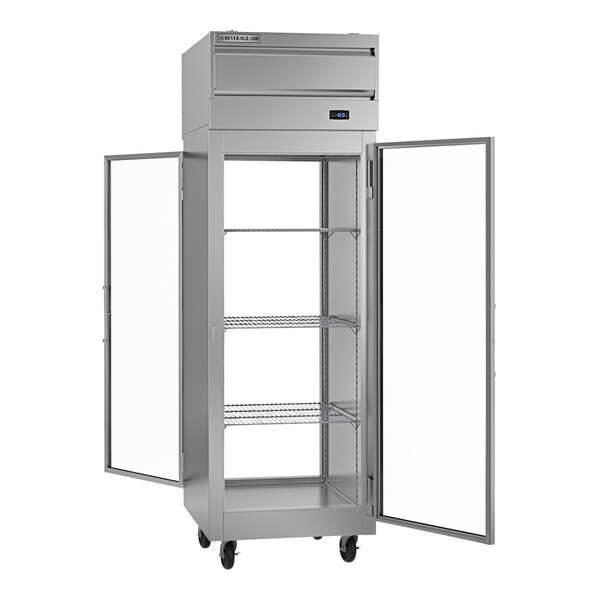
Pass-through refrigerators and pass-through freezers are specialized units designed with doors on both sides, providing a safe space to transfer items between two different areas of the kitchen, usually the prep area and the service station. When implemented correctly, pass-through refrigerators and freezers streamline the food prep process and minimize the risk of cross-contamination from improper handling.
Pass-through units are perfect for high-volume establishments where maintaining a separation between zones is essential, like school cafeterias, buffets, and healthcare facilities. They can also function as a de facto merchandiser in the right setting, allowing your back-of-house staff to stock them with product while front-of-house customers browse.
- Best for: Storing foods between kitchen zones
- Restock: With prepared foods on a case-by-case basis

4. Walk-In Coolers and Freezers
Walk-in coolers and walk-in freezers function as their own refrigerated room, providing ample space for storing large quantities of fresh or frozen ingredients. They can be purchased as individual units or built into your facility, offering a customized solution to your refrigeration needs. Their insulated walls, ceilings, and floors ensure complete temperature control, maintaining the desired conditions to keep your ingredients in ideal condition.
No matter what kind of walk-in unit you choose, they the most value in kitchens that require a significant amount of fresh or frozen stock, as well as high-volume foodservice establishments that need to store large quantities of ingredients daily. For optimal results, these units should be located in your receiving area or immediately adjacent to it, allowing you to take large shipments and place them directly inside, thereby reducing foot traffic in a busy kitchen.
- Best for: Large-scale ingredient storage
- Restock: As weekly or monthly shipments arrive
5. Undercounter Refrigerators and Freezers
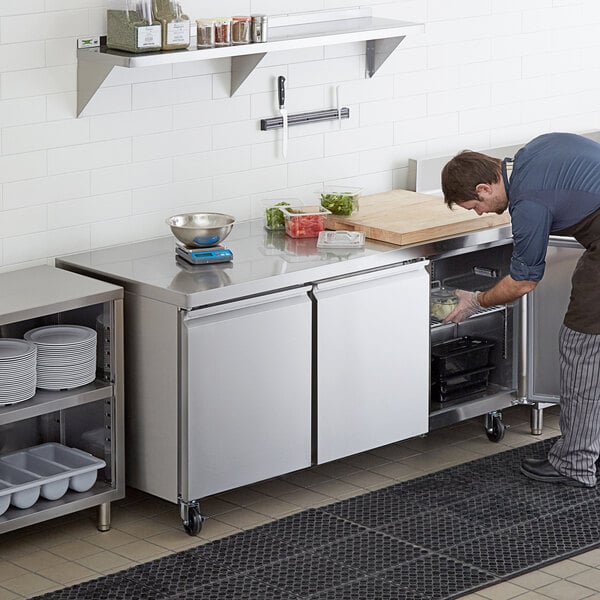
As their names suggest, undercounter refrigerators and undercounter freezers rest underneath countertops, making them an ideal refrigeration solution for establishments where space is at a premium. These compact units free up valuable floor space for other equipment, promoting a streamlined workflow in your kitchen.
Undercounter units are perfect for placement in prep areas, providing quick and easy access to commonly used ingredients and supplies. Additionally, they can be installed beneath a bar to store cocktail ingredients or mixes, keeping them within reach for bartenders and ensuring a smooth service. Undercounter refrigerators and freezers are also beneficial for use in pizzerias, sandwich shops, and catering businesses that frequently utilize the same ingredients.
- Best for: Compact ingredient storage
- Restock: From walk-in cooler or freezer weekly or as needed
When evaluating the door type for your commercial refrigerator or freezer, consider the layout of your kitchen, the frequency of access, and the importance of energy efficiency. Each door style offers unique benefits, so it's essential to choose one that aligns with your operational needs and space constraints.
Swing Doors
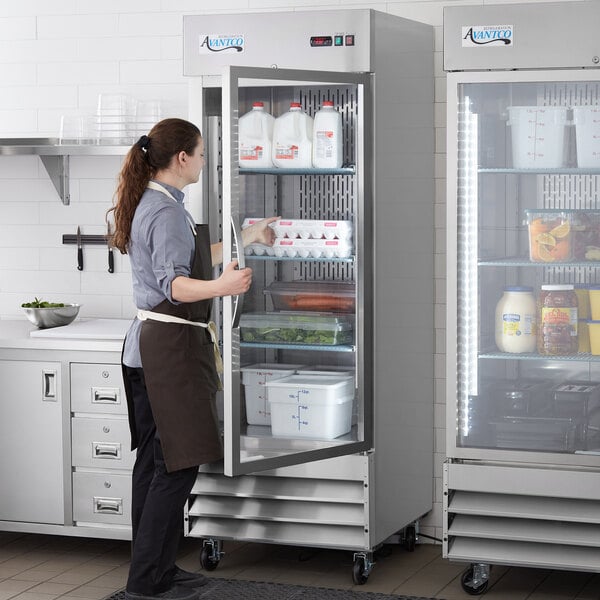
Swing doors are the standard style of door that most people envision on a refrigerator or freezer. These units feature large, hinged doors that swing outwards towards the user for easy access to the contents inside. Depending on the layout of your kitchen, the swing door can be located on the left or right side. One of the key advantages of swing doors is that they are often designed to stay open if needed, facilitating the easy loading and unloading of items. Additionally, when open, swing doors provide an easy view of a unit’s entire contents, allowing for quick and efficient inventory management.
- Best for: Standard refrigeration needs
- Used on: All styles of refrigerators
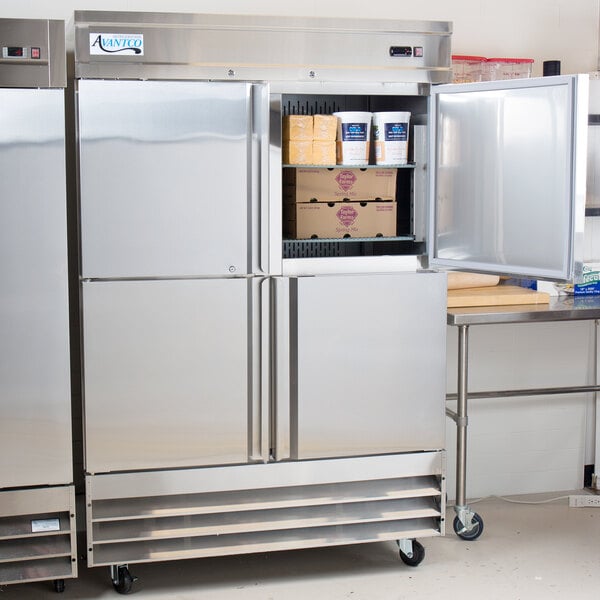
Half Doors
Half doors offer a similar design to swing doors, with the key distinction being that they are split into two sections. This design allows you to open either the top half or the bottom half of the door, depending on your specific needs. The primary advantage of half doors is energy conservation and efficient temperature control. By only opening the door corresponding with the section of the refrigerator or freezer you're looking through, half doors prevent excess warm air from entering the unit unnecessarily, minimizing temperature fluctuations and reducing the workload on the refrigeration system.
- Best for: Temperature retention, energy efficiency
- Used on: Reach-in units
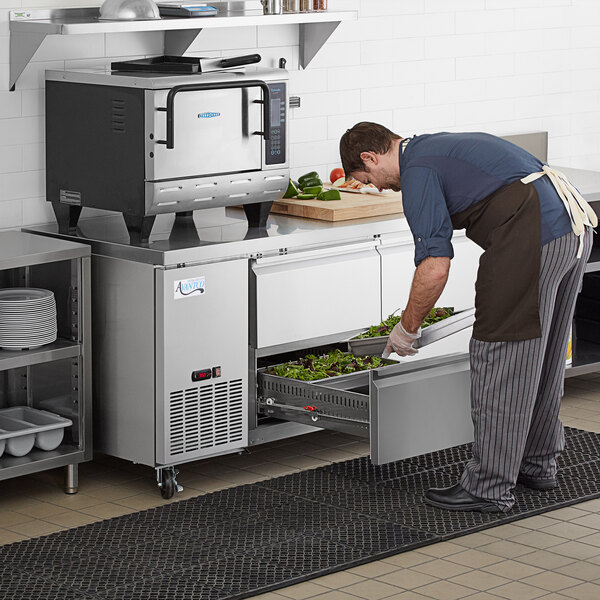
Drawers
Drawer refrigeration doors feature a pull-out design, providing top-down access to your stored items. This design is especially convenient for undercounter units, where space conservation is key and easy item recognition is necessary. Drawer doors can also be built into larger units and used in combination with swing doors. This innovative setup allows you to enjoy the benefits of both types, providing flexibility and convenience in accessing your stored products.
- Best for: Convenient top-down storage
- Used on: Combination reach-in units, undercounter units

Strip Curtains
Strip curtains, or strip doors, provide a protective barrier that is easy to pass through while maintaining the desired temperature inside a walk-in unit. They typically consist of flexible plastic strips that are hung from the top of the doorway. When someone passes through the doorway, these overlapping, weighted strips quickly seal back together, keeping warm air in and cold air out to maintain optimal temperature control.
- Best for: Easy access for bulk storage and inventory
- Used on: Walk-in units
Beyond the actual size and design of your refrigerator or freezer, you also need to consider its overall impact on your kitchen and food prep process. Key details, features, and add-ons play a significant role in how you store food, like product visibility, ease of cleaning, and even how you set internal temperatures.
Door Transparency
The door of a unit plays a significant role in both functionality and aesthetics, making it a key decision in your buying process. For standard refrigerators and freezers, you typically have the option to choose between solid doors and glass doors.
- Solid doors: Typically made from materials such as stainless steel or aluminum in commercial models, solid doors are built to withstand the demands of a busy kitchen. Solid doors are simpler to maintain and keep looking pristine. While they provide excellent insulation, they do not allow for easy viewing of the contents inside the unit.
- Glass doors: The transparent design of glass doors allows you to see what is inside the unit without having to open it, saving time and energy. However, they don'toffer as much insulation as solid doors, leading to slightly higher energy consumption compared to their solid door counterparts. Additionally, the transparent nature of glass doors requires more frequent cleaning to maintain clarity and visibility.
Compressor Location
The compressor is the component that powers your refrigeration system. It circulates refrigerant, ensuring foods stay cold and your equipment functions efficiently. As warm air naturally rises and cold air descends, top- and bottom-mounted compressors function better in different environments.
- Top-mounted compressors: These compressors pull in warmer air, making them ideal for cooler environments. They are less likely to clog and do not take up storage space within the unit, but are less accessible for cleaning.
- Bottom-mounted compressors: This style of compressor pulls in cooler air, providing a great fit for warm kitchens. Due to the compressor's location, your bottom shelves will be positioned higher on the unit, making them easier to access. However, the compressor can become clogged with dust, grease, or debris from the floor, and a bottom-mounted compressor can cut into your overall storage space within the unit.
Removable Gaskets
Gaskets form an airtight seal around your refrigerator's door, keeping cold air locked inside. Some reach-in refrigerators feature an easily removable door gasket to expedite cleaning and sanitizing. These gaskets can also be replaced once they show signs of wear and tear, keeping your unit in peak condition longer.
Digital Thermostats
Many newer models of reach-in refrigerators and freezers are equipped with a digital thermostat. Because digital thermostats provide more accurate readouts and make it easier to monitor temperatures, they normally lead to lower service costs and fewer maintenance calls. Additionally, they are easier to program and set, allowing for quick, convenient temperature adjustment as needed.
Spec Line vs. Standard Duty Refrigerators
While all commercial refrigerators and freezers are designed with the demands of the busy food service operation in mind, specification line reach-in refrigerators and freezers represent a manufacturer's top-of-the-line offerings. A spec line product boasts more sophisticated temperature controllers, a wider variety of exterior and interior options, and upgrades in design and construction features compared to a standard duty model. These models are typically specified by consultants for institutional design projects, providing a high-end solution for select kitchens.
Beyond the actual features of the fridge or freezer you plan to purchase, you also need to consider where and how you will install the unit. Keep the following considerations in mind, and consider hiring a professional for proper installation if needed.
- Measure door frames and hallways: Refrigerators and freezers are bulky units, and you should measure the length and width of any door frames and hallways before making a purchase. Not only does this ensure the unit fits inside the kitchen, but it also helps you come up with a plan to get it through the door.
- Verify your kitchen has space for ventilation: Most manufacturers' specification sheets or manuals specify clearance guidelines for the back and sides of the unit. Failure to adhere to these guidelines can result in inefficient operation, service calls, or even void your warranty. You should also avoid installing units in exceptionally humid or dusty areas because these conditions can cause the unit to rust or the condenser coil to malfunction.
- Install the unit on a level surface: Once you have the unit in a well-ventilated room, install it on a level surface away from heat and moisture-generating equipment. Operating a reach-in in high ambient temperatures may cause the unit to break down, and in many cases, it will void the warranty.
- Ensure it has the proper power supply: A reach-in refrigerator or freezer should be supplied with the correct voltage according to the manufacturer's literature, and it should have its own dedicated electrical circuit. Refer to your equipment manual for best practices and any special considerations for your particular unit.
When it comes to commercial refrigerators and freezers, the options are vast and varied. There isn't a one-size-fits-all solution, and your needs can change over time. They are an important part of any commercial kitchen, and building a strong understanding of the types of commercial refrigeration equipment will help you set your kitchen up for success in the long run, ensuring safe and efficient food storage.
Related Resources

April 2026 WebstaurantStore Coupon Code
Spring is here, and great deals are blooming in the warm weather here at WebstaurantStore! Stock up on much-needed supplies and equipment for important upcoming events like Earth Day and Mother's Day! Take a look at our selection of sale items below and don't forget to enter the code BLOOM26 at checkout to enjoy 15% off your purchases! Looking to save even more? Check out the new Webstaurant Rewards® Visa Business Card ! Sign up for a new card today and start earning rewards on every WebstaurantStore purchase, and save on a WebstaurantPlus subscription. Have a look at some incredible deals on disposable items with April's monthly coupon code! Whether you're looking for disposable dessert cups for spring sweet treats or compostable hot cup o

Self Contained vs Remote Refrigeration
Understanding the differences between self-contained and remote refrigeration is crucial when it comes to choosing the right refrigeration system for your commercial kitchen. Self-contained units keep both the refrigeration system and the storage compartment in a single piece of equipment, making them ideal for smaller spaces or mobile applications. On the other hand, remote refrigeration systems (most common for walk-in coolers) separate the compressor and condenser unit from the storage area, allowing for quieter operation and greater flexibility in design. Let's explore the key factors to consider when deciding between self-contained and remote refrigeration to help you make an educated decision for your kitchen layout and budget. Shop A

Refrigerants Explained
Refrigerants are crucial for commercial refrigeration systems, responsible for cooling and preserving perishable items. With refrigerant regulations phasing out ozone-depleting refrigerants, such as R-22, many businesses are transitioning to more environmentally friendly options. Understanding the different types of refrigerants available for commercial use can help you make an informed decision when it comes to replacing your refrigerator or freezer. Shop All Commercial Refrigerators What Is Refrigerant? Refrigerant is a cooling agent that absorbs heat and leaves cool air behind when passed through a compressor and evaporator. It undergoes a continuous cycle of compression and expansion where the coolant fluctuates between a liquid or gas
Join Our Mailing List
Receive coupon codes and more right to your inbox.