
- Topics 1568
- Industrial 59
- Troubleshooting Guides 32
- Restaurant Management 145
- Bar Management 69
- Catering Tips 43
- Bakery Management 44
- Food Trucks & Concessions 36
- Advertising & Marketing 41
- Eco-Friendly Tips 13
- Facility Layout & Design 47
- Coffee Shop Tips 32
- Installation & Maintenance 63
- Janitorial & Pest Control 34
- Safety & Sanitation 122
- Startup Tips 110
- Menu Design 13
- Kitchen & Cooking Tips 108
- Hospitality Management 25
- Pizza & Sandwich Shop Tips 21
- Smallwares 42
- Food Prep 102
- Tabletop Items 21
- Disposables 28
- Calculators & Tools 7
- Consumables 77
- Warewashing & Laundry 22
- Cooking Equipment 107
- Food Storage & Refrigeration 57
- Beverage Equipment 42
- Office Supplies 6

A commercial convection oven is often the backbone of a high-output kitchen because it turns sheet-pan cooking into a predictable, repeatable process. When you're pushing batches through prep and service, the best convection ovens help you hold tighter cook windows and hit consistent color and texture. Below, we break down the practical specs that affect the day-to-day performance of convection ovens, including aspects like power type, footprint, ventilation needs, and their core features.
Shop All Convection Ovens
Use the following links to learn more about the different aspects of commercial convection ovens:
A commercial convection oven is a type of oven that uses a fan to circulate hot air for more uniform cooking and faster heat transfer than a still-air oven. They're built for repeatable results across multiple pans. Convection ovens are commonly used for roasting proteins and vegetables, baking cookies and pastries, and finishing menu components during service. Most models support standard sheet pans and come in countertop or floor configurations to match your output and footprint.
How Does a Convection Oven Work?
A convection oven works by heating the cavity and then using a fan to push and pull hot air around the food. That moving air strips away the cooler layer that naturally forms at the surface of the product, so heat penetrates more efficiently and cooks more evenly. Because air is constantly recirculating, the oven recovers temperature faster after door openings, important when staff are loading and unloading during a rush. Many commercial units also allow fan-speed adjustments to handle delicate bakes without blowing batter or drying out lighter items.
Convection Oven Benefits
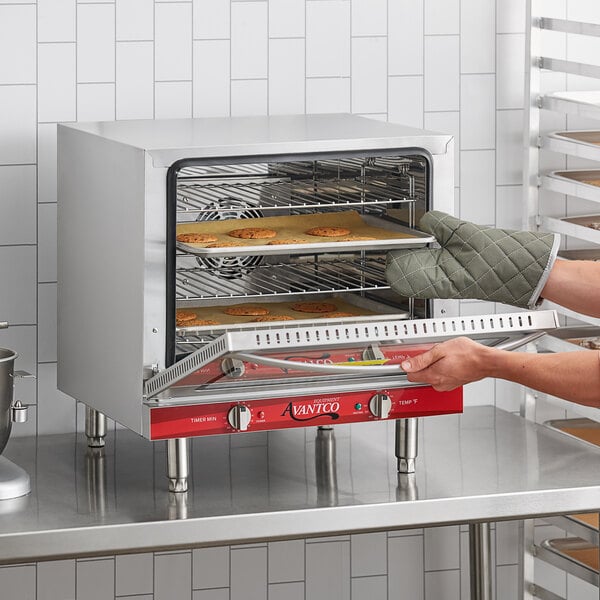
Convection ovens earn their keep when you need consistent quality at volume without babysitting every rack. The fan-driven airflow tightens production timing, improves repeatability, and helps your kitchen hit the same finish across different operators and shifts.
- Even Browning: Air circulation reduces hot spots, so items like cookies, roasted vegetables, and sheet-pan proteins color more consistently from corner to corner.
- Shorter Cook Times: Faster heat transfer can reduce bake and roast times, supporting higher throughput during prep and service.
- Better Multi-Rack Consistency: Running several pans at once is more predictable, which helps batch cooking and reduces the need to rotate trays mid-cycle.
- Faster Temperature Recovery: Useful on busy lines where the door gets opened repeatedly and you still need stable results.
- Flexible Production: Handles baking, roasting, and finishing tasks, making it a strong all-purpose workhorse for many kitchens.
Convection Oven vs Conventional Oven
A convection oven differs from a conventional oven by using a fan to move hot air through the cavity, while a conventional oven relies mostly on radiant heat and natural air circulation. Convection is usually the better pick when you want faster cook times, more consistent browning, and reliable results across multiple sheet pans.
Conventional ovens tend to be more forgiving for delicate items where strong airflow can cause uneven rise or surface drying, such as some custards, souffles, or very light cakes. If your menu leans on sheet-pan production and throughput, convection is the workhorse, but if you're primarily handling sensitive bakes or you want a simpler heat environment with fewer variables, a conventional oven can still make sense.
Power types typically fall into electric, natural gas, or propane, with the best choice depending on your utility access, operating costs, and how you use the oven day to day. Beyond energy pricing, power type affects heat-up behavior, temperature stability, ventilation requirements, and what's realistic to install in your space.
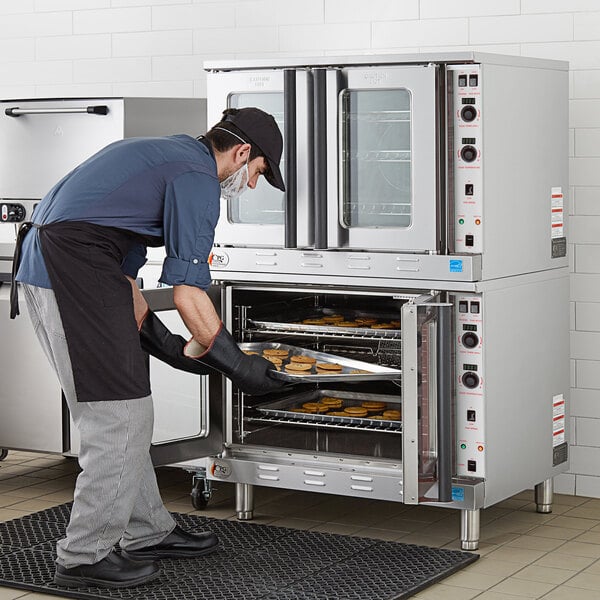
- Electric: Electric convection ovens are known for steady, even heat and tight temperature control. This is a strong fit for bakeries, pastry programs, and any operation that needs repeatable results across shifts. They're often simpler to install where gas hookups aren't available, but electrical requirements can be higher and utility costs may run more depending on your market.
- Natural Gas: Natural gas models typically heat quickly and can be cost-effective to run in many regions, making them popular in high-volume kitchens that roast and cook frequent batches all day. They do require a proper gas connection and ventilation planning, and temperature precision can vary by model compared to electric, especially for baking-intensive menus.
- Propane: Propane convection ovens deliver gas-style heat where natural gas isn't available, so they're common in rural locations, temporary kitchens, and mobile or seasonal operations. You'll need safe cylinder storage and regular fuel management, and pricing can fluctuate. However, propane can keep you operational when electric capacity is limited or gas lines aren't an option.
Countertop convection ovens and floor models do the same core job, but they differ in capacity, footprint, and how they fit into your production flow. Floor models are designed for higher throughput with more rack space and larger sheet-pan loads, making them a better match for prep-heavy kitchens, banquets, and operations that bake or roast in continuous batches.
Countertop units trade volume for flexibility, giving small kitchens, cafes, and supplemental stations an easy way to add convection cooking without committing floor space. The practical decision comes down to how many pans you need to move per hour, where the oven will live, and whether it's your primary oven or a support piece for retherming and finishing.
Full Size vs Half Size Convection Ovens
Full size and half size convection ovens are defined by the pans they're built to hold, and that sizing directly impacts output and workflow. Full size units accommodate standard full sheet pans, which makes them the go-to for batch baking, roasting, and high-volume retherming where you want maximum product per cycle.
Half size convection ovens use smaller pans and typically cost less, heat faster, and fit tighter footprints, which suits smaller menus, limited prep space, or secondary cooking tasks. If your kitchen already relies on full sheet pan production, full size keeps you standardized, but if you're managing smaller batches or tight counter space, half size can be the more efficient fit.
Single vs Double Deck Convection Ovens
A single deck unit is typically easier to place, cheaper to purchase and install, and well-suited for kitchens that run one core oven schedule or use convection as a support piece for finishing. Double deck models stack two independent cavities in the same footprint, which increases output and lets operators run separate temperatures or products at once, useful for bake-and-roast menus or high-volume prep days. The tradeoffs are higher upfront cost and more space and utility demand.
Deep Depth vs Standard Depth Convection Ovens
Deep depth and standard depth convection ovens use the same cooking method, but they're built for different pan orientations and capacity needs. Standard depth models are typically sized for common sheet-pan use and are easier to place in tighter cooklines without interfering with aisle space. Deep depth units provide more front-to-back clearance, which can increase pan capacity or make it easier to load certain trays and hotel pans depending on the rack design.
The main tradeoff is space. Deep depth ovens demand more depth clearance for placement and door swing, which matters in narrow kitchens. Choose deep depth when additional capacity per bake cycle solves a real bottleneck, and stick with standard depth when layout efficiency is the priority.
The ventilation type of your convection oven describes how the equipment handles heat, vapors, and grease-laden waste so you can install and operate it safely within local code. The right setup depends on what you're cooking, where the oven sits in the kitchen, and whether you can tie into an existing exhaust system.
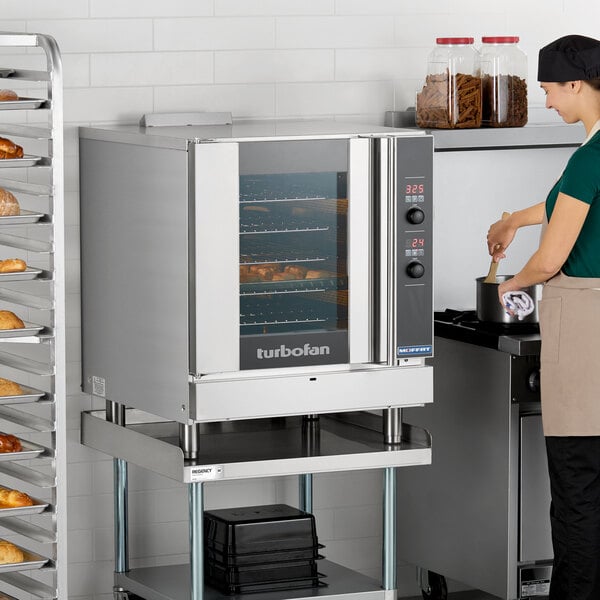
- Draft Diverter: A draft diverter routes flue gases up and away from the oven, typically on gas models, and is meant to work with proper room ventilation or a canopy hood as required. It's a straightforward, common approach, but it does not eliminate the need for compliant exhaust when you're cooking grease-producing foods or when code requires mechanical ventilation.
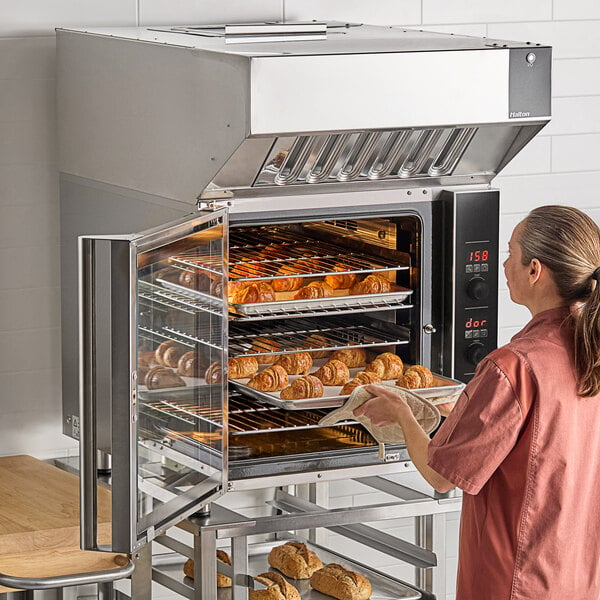
- Ventless Hood: A ventless hood is a self-contained capture-and-filtration system mounted with the oven that uses filters to manage smoke, heat, and odors without ducting to the outside. It can solve installs when no ductwork is available for front-of-house and kiosks, but it adds upfront cost, requires routine filter maintenance, and may still be limited by what products and volumes you can cook under it.
- Ventless: Ventless convection ovens are designed to operate without a traditional exhaust connection by minimizing emissions and managing moisture internally, which can simplify placement in tight or nontraditional locations. They're best for light-duty baking and retherming rather than heavy roasting of fatty proteins, since odor and vapor loads can still become a problem in the room. Always verify local code acceptance and the manufacturer's listed cooking applications.
Convection oven features are the add-ons that change how the oven performs in service, impacting utility costs, product consistency, labor, and where the unit can be placed. The best features depend on whether you're prioritizing bake quality, speed during peak, or an easier install in a tight kitchen layout.
- Energy Star Qualified: ENERGY STAR-qualified models are designed to hit efficiency targets, which can lower energy use and reduce heat load in the kitchen over time. The downside is that the most efficient units can carry a higher upfront price, so the value is strongest for operations running the oven for long hours most days.
- Programmable: Programmable controls let you save cook cycles to standardize results across staff and shifts. They're ideal for multi-location consistency and high turnover kitchens, but they add complexity. If the interface is clunky or training is weak, operators may ignore the presets and lose the benefit.
- Steam Injection: Steam injection adds controlled bursts of moisture during baking, improving oven spring and crust development for bread, rolls, and some pastries while helping prevent early surface drying. It's a premium feature with more components to maintain, and it's less useful if your oven mainly retherms or roasts rather than bakes from raw dough.
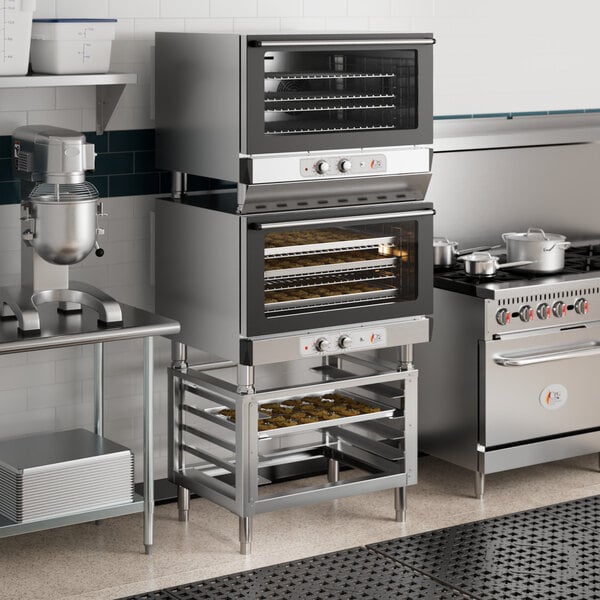
- With Stand: A stand raises the oven to a more ergonomic loading height and can free up space below for storage, trays, or sheet pans, depending on the design. It increases the unit's footprint and total height, so it's best when you're using the oven as a primary production tool and want safer, faster loading during busy periods.
- Field-Reversible Doors: Field-reversible doors allow the hinge side to be swapped during installation, helping the oven fit your line layout, traffic pattern, and adjacent equipment without creating bottlenecks. It's most valuable in tight kitchens and corner installs; the tradeoff is that reversing may require extra labor and planning, especially if the oven is already set in place.
Before purchasing, you must consider the practical factors that determine whether an oven will actually fit your kitchen, match your production needs, and pay off over its service life. A good oven matches your restaurant's utilities, throughput, and layout, becoming an integral part of your operations.
- Available Utility: Confirm what you can realistically support and determine any ventilation or make-up air requirements. Choosing a model that doesn't match your current utility structure can turn an upgrade into a costly electrical or gas project.
- Menu and Service Volume: Buy for what you cook most and how often you cook it, then size the cavity and pan capacity to your peak-hour demand. If you routinely run multiple pans per cycle, prioritize rack space and recovery, and if you mainly finish small batches, a smaller unit can be faster and more efficient.
- Installation Space: Measure the full footprint, door swing, required clearances, and the workflow around loading/unloading so the oven doesn't choke the line or block other equipment. Counter height, aisle width, and nearby heat-sensitive stations are other sizing considerations to keep in mind.
- Budget: Plan beyond the initial price by factoring in installation labor, ventilation changes, accessories, and ongoing costs like energy use and maintenance. Spending a bit more up front can make sense when it reduces utility and maintenance costs, cuts cook time, or prevents downtime in a kitchen that depends on the oven daily.
Related Resources

October 2026 WebstaurantStore Coupon Code
Fall flavors are in full swing, and the deals at WebstaurantStore are just as irresistible! Stock up on everything your kitchen needs for a busy stretch of autumn, from disposables and pantry staples to equipment that keeps service moving. Browse our featured sale items below, and use code SPICE26 at checkout to save up to 20% on your purchase. Hot drinks, cozy desserts, and warm soups take center stage this time of year, so there's plenty here to fuel your seasonal menu. Sign up for our emails to get exclusive deals and coupon codes delivered straight to your inbox! Looking to save even more? Check out the new Webstaurant Rewards® Visa Business Card ! Sign up for a new card today and start earning rewards on every WebstaurantStore purchase
Blodgett Convection Oven Troubleshooting Guide
A malfunctioning convection oven is a major inconvenience, and even ovens from top brands like Blodgett can experience issues from time to time. Fortunately, many of these problems can be fixed easily! We'll take you through some simple steps to try on your Blodgett convection oven first and let you know when it's best to give your repair service a call. Use the following links to navigate and learn how to troubleshoot common Blodgett convection oven issues: Oven is Not Heating Up Oven is Taking Too Long To Preheat Oven Fan Does Not Run General Baking Issues Where to Find a Blodgett Serial Number How to Read a Blodgett Serial Number Common Replacement Parts
Commercial Bakery Equipment List
Finding the best bakery equipment can be daunting, whether you've owned a bakery for years or are just starting in the industry . It represents a significant investment, and you'll want to get the most for your money. Before purchasing, consider your menu, expected output, and preferred baking styles. To help guide you through the purchasing process, we've provided a list of essential bakery equipment and a downloadable checklist below: Download Checklist PDF Click any of the tips below to skip to the bakery equipment that interests you: Dough Prep Equipment Baking Equipment Display Equipment Dough Prep Equipment Dough preparation is the cornerstone of creating delicious baked goods, and having the right equipment is a key factor for achiev
Join Our Mailing List
Receive coupon codes and more right to your inbox.