- Topics 1574
- Industrial 59
- Troubleshooting Guides 32
- Restaurant Management 144
- Bar Management 71
- Catering Tips 43
- Bakery Management 43
- Food Trucks & Concessions 36
- Advertising & Marketing 41
- Eco-Friendly Tips 13
- Facility Layout & Design 48
- Coffee Shop Tips 32
- Installation & Maintenance 63
- Janitorial & Pest Control 35
- Safety & Sanitation 124
- Startup Tips 110
- Menu Design 13
- Kitchen & Cooking Tips 107
- Hospitality Management 25
- Pizza & Sandwich Shop Tips 20
- Smallwares 44
- Food Prep 104
- Tabletop Items 21
- Disposables 28
- Calculators & Tools 6
- Consumables 77
- Warewashing & Laundry 22
- Cooking Equipment 107
- Food Storage & Refrigeration 57
- Beverage Equipment 43
- Office Supplies 6

Smallwares may not be the highest-ticket item in your budget, but they touch nearly every step of your operation, from storing and prepping ingredients to cooking, serving, and cleaning up. Choosing durable, functional pieces helps your team work faster, stay organized, and maintain the consistency and food safety standards your guests expect. Whether you're outfitting a brand new kitchen or restocking an established one, this guide covers the essential smallwares every foodservice operation needs to run efficiently.
Shop All Restaurant Smallwares
Learn more about the different types of kitchen smallwares:

Proper food storage supplies are the foundation of food safety in any foodservice operation. The right containers protect ingredients from contamination, extend shelf life, and keep walk-ins, prep stations, and dry storage organized. Durable, stackable, and clearly labeled storage containers also cut down on waste and make it easier to follow FIFO (first in, first out) rotation. Whether you’re holding prepped ingredients, storing bulk dry goods, or transporting food off-site, these essentials keep your operation running smoothly and up to code.
- Food storage containers: A staple in every kitchen, food storage containers hold prepped ingredients, sauces, soups, and leftovers in coolers, freezers, and on shelves. They keep food fresh, protected, and easy to identify. Clear walls and lids that allow for date labeling make rotation and inventory checks quick.
- Food pans: Also called hotel pans or steam table pans, food pans are used for cooking, hot and cold holding, prep, and storage. Available in a range of sizes and depths to fit steam tables, prep tables, and refrigerated units, they’re among the most widely used items in any kitchen. Choose the material based on how you plan to use them, whether that’s heating, chilling, or simple storage.
- Ingredient bins: Bulk dry goods like flour, sugar, rice, and grains stay organized and protected in large-capacity ingredient bins. Many have wheels for easy movement and lids that keep ingredients accessible while protecting them from pests and moisture. They’re ideal for high-volume kitchens and bakeries that go through staples quickly.
- Food storage jars: Perfect for stations where items need to be seen and reached quickly, jars hold smaller quantities of ingredients like spices, dressings, condiments, and garnishes. Wide mouths make scooping and pouring easy, while airtight lids help maintain freshness.
- Food storage boxes: Designed for bulk storage of items like produce, bread, and prepped foods, lidded boxes make the most of limited space in walk-in coolers and storerooms thanks to their stackable or nesting designs.
- Lug/tote boxes: Sturdy and stackable, lug and tote boxes help haul and organize produce, bar supplies, dishware, and other items between storage, prep, and service areas. Some feature ventilated styles that promote airflow to help keep produce fresh, while others are designed with built-in handles that make carrying easier. Some even nest when empty, so they’re simple to store between uses.
- Insulated food carriers: Essential for catering, off-site events, and delivery, insulated carriers keep food at safe temperatures during transport and holding. They protect food quality and help operators stay compliant with food safety guidelines when meals have to travel.

Hand tools are the everyday essentials that keep a kitchen moving, from the first cut during prep to the final plate at service. Having the right tool within reach helps cooks work faster, portion accurately, and deliver consistent results. Quality tools also improve safety, whether that means a sharp knife that cuts cleanly or a thermometer that confirms food has reached a safe temperature.
- Kitchen utensils: Spatulas, whisks, ladles, spoons, peelers, and other everyday tools fall into this broad category, covering nearly every task from stirring and flipping to mixing and scooping. Since every station depends on them, durability and comfortable handling matter. Heat-resistant and color-coded options add extra performance and help prevent cross-contamination.
- Tongs: Tongs give cooks a secure grip for turning, lifting, and plating hot foods without reaching over a flame or grill. Salad bars, buffets, and pastry cases also benefit from them for clean, hands-free serving. Locking designs store compactly, and heat-resistant styles hold up on busy cooktops.
- Thermometers: Essential for food safety, thermometers confirm that food is cooked, held, and stored at the correct temperatures. Probe, instant-read, and oven-safe styles cover everything from checking a chicken breast to monitoring a walk-in cooler.
- Measuring cups and spoons: Accurate measuring keeps recipes consistent, portions controlled, and food costs in check. Suited to both dry and liquid ingredients, measuring tools are especially important in baking, where precision affects the final product.
- Serving utensils: Designed for moving food from pan to plate, serving utensils include spoons, ladles, spatulas, and slotted and solid styles for buffets, catering, and line service. Portion control and presentation get a boost, all while keeping hands away from food.
- Seafood tools: Crab crackers, lobster picks, oyster knives, and similar tools help guests and cooks get at shellfish quickly and cleanly. A must-have for restaurants that feature seafood boils, raw bars, or whole-shellfish entrees, they’re best in corrosion-resistant materials that hold up well to frequent washing and salty environments.
- Meat tenderizers: Used to pound or pierce cuts of meat, tenderizers break down tough fibers and flatten proteins for even cooking. Options include traditional mallets for flattening or needle- and blade-style tools for piercing.
- Food mills: Food mills press cooked foods through a perforated disc to produce smooth purees, sauces, and soups while separating out skins and seeds. Tomato sauce, mashed potatoes, and fruit purees all come out with a consistent texture, making this a favorite in many kitchens. Interchangeable discs let cooks choose how fine or coarse the final result should be.
- Steak weights: Placed on top of meat as it cooks, steak weights press food flat against the cooking surface for faster, more even searing. Bacon, burgers, sandwiches, and paninis also cook up well under their pressure. A heavy build and a heat-resistant handle make them easy to use on a busy grill or griddle.
- Funnels: Funnels make it simple to transfer liquids, oils, sauces, and dry ingredients into bottles, jars, and narrow-mouthed containers without spills, cutting down on waste and keeping stations cleaner during prep and refilling. Styles vary by use, from wide-mouth options for dry goods to fine-tipped versions for sauces.
- BBQ accessories: Grill brushes, basting brushes, skewers, forks, and other grilling tools help pitmasters and grill cooks manage food over high heat. Cleaning the grates, applying sauce, and turning large cuts of meat all get easier with the right accessory, while long handles and heat-resistant materials keep hands safely away from the fire.

Commercial cookware is the workhorse of any kitchen, and the right pieces make the difference between smooth service and a bottleneck on the line. From searing and sauteing to simmering stocks and sauces, each type of pot and pan is built to handle a specific job at high volume. Durable construction stands up to constant use, high heat, and frequent cleaning, while the right material and size help cooks work faster and get consistent results. Stocking a well-rounded lineup ensures your team has the tools to execute every item on your menu.
- Frying pans: Also known as fry pans or skillets, frying pans are a go-to for searing, browning, and frying proteins, vegetables, and eggs. A wide, shallow design with sloped sides makes it easy to flip and toss food, which is why you’ll find one on nearly every line. Choose the material based on your menu, whether that’s aluminum for quick heating, stainless steel for durability, or nonstick for delicate items.
- Stock pots and accessories: Tall and high-capacity, stock pots are built for simmering stocks, soups, and stews, as well as boiling pasta and cooking large batches. Lids, strainer baskets, and spigots add convenience for draining, holding, and serving.
- Sauce pots and pans: Used for heating, simmering, and reducing sauces, gravies, and smaller batches of soups, sauce pots and pans are a versatile pick for everyday prep and service. Moderate depth and tight-fitting lids help control evaporation and keep food from scorching. A heavy-gauge base promotes even heating, which is key for delicate sauces.
- Braziers: Wide and deep with a sturdy build, braziers are made for braising, stewing, and cooking large cuts of meat, as well as holding and finishing dishes in volume. Flexibility is a big selling point, since they work on the range or in the oven for slow-cooked menu items. Kitchens that feature roasts, short ribs, or other braised dishes will find them especially useful.
- Cast iron cookware: Prized for its excellent heat retention and even cooking, cast iron cookware is ideal for searing, baking, and serving sizzling dishes right at the table. Moving easily from stovetop to oven, it can last for years with proper seasoning and care.
- Cookware sets: Bundling commonly used pots and pans together, cookware sets are a convenient way to outfit a new kitchen or refresh an existing line. Cohesive looks and consistent performance across pieces come standard, often at a better value than buying items individually. Startups, concepts with smaller menus, and training or test kitchens are all good fits.
- Saute pans: Featuring straight sides and a flat bottom, saute pans are designed for cooking sauces, searing, and sauteing foods that benefit from a larger surface area and more depth than a frying pan. Excellent liquid retention makes them a smart choice for pan sauces, braising smaller portions, and dishes that go from stovetop to finish. Their versatility makes them a key piece for chefs who do several jobs.
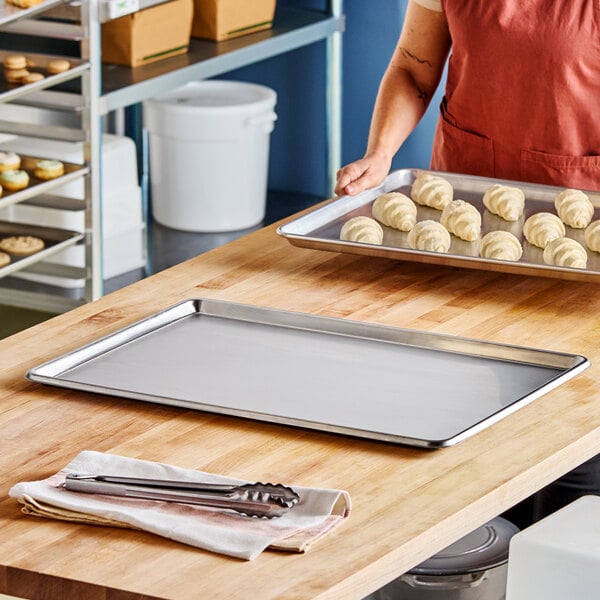
Baking smallwares and supplies are the backbone of any bakery, cafe, or restaurant that makes its own breads, desserts, and pastries. Consistent results depend on having the right pans, tools, and molds on hand, whether you’re turning out hundreds of rolls or plating a single dessert. Quality supplies also help with efficiency, since durable, easy-to-clean pieces hold up to the daily demands of a busy production schedule. A well-stocked baking station helps your team deliver the same great product every time, from the first batch to the last.
- Baking pans: Sheet pans, cake pans, loaf pans, muffin tins, and pie pans are the foundation of any baking operation, and each is built for a specific type of product. Everything from cookies and sheet cakes to breads and pastries relies on the right pan for the job. Choose durable, even-heating baking pan materials like aluminum, and consider nonstick or silicone-coated options to speed up release and cleanup.
- Baking tools and utensils: Pastry brushes, dough scrapers, rolling pins, spatulas, whisks, and cooling racks keep production moving from mixing to finishing. Shaping dough, applying glazes and egg washes, and transferring finished items without damage all become easier with the right tool in hand.
- Decorating tools: Piping bags, decorating tips, turntables, offset spatulas, and cake combs give bakers the means to finish cakes, cupcakes, and pastries with a polished, professional look. Bakeries and restaurants that rely on eye-catching presentation to drive sales will consider them essential. Reusable and disposable options let operators choose based on volume and cleanup needs.
- Countertop bakery display: Cake stands, pastry domes, display cases, and tiered stands put finished baked goods front and center for customers. Products stay protected from air and handling while on display, which helps encourage impulse purchases. Look for options that are easy to clean and sized to fit your counter space and product line.
- Baking molds: Used to shape everything from individual desserts and tarts to chocolates and savory items, molds help create uniform, eye-catching products. A wide range of shapes and materials is available, including silicone, metal, and plastic. Consistent shapes make portion control and plating easier, especially for menus that feature signature desserts.
- Bread making supplies: Proofing baskets, bread lames, dough dividers, loaf pans, and baguette trays support every stage of bread production, from shaping and proofing to scoring and baking. They help bakers produce uniform loaves with the right texture, rise, and crust. Operators who make artisan breads, rolls, or pizza dough in-house will find them especially useful.

Kitchen supplies are the behind-the-scenes essentials that support every stage of food prep, from the first ingredient out of the walk-in to the final plate leaving the pass. The right bowls, boards, and bottles keep prep organized, while strainers and safety supplies help protect both your food and your staff. Durable, easy-to-clean items hold up to constant use and make it simpler to maintain a sanitary workspace. Outfitting each station with these basics helps your team work faster, stay compliant, and keep service running smoothly.
- Mixing bowls: Used for combining ingredients, tossing salads, marinating proteins, and holding prepped items, mixing bowls are some of the most frequently used pieces in any kitchen. Stainless steel is a popular choice for its durability and resistance to stains and odors, while plastic and melamine options are light weight and budget-friendly.
- Cutting boards: Every prep station needs a reliable surface for slicing, dicing, and trimming, and cutting boards protect both your knives and your countertops. Color-coded boards help prevent cross-contamination by keeping raw meats, seafood, produce, and cooked foods separate. Look for boards that are non-porous, easy to sanitize, and gentle on knife edges.
- Squeeze bottles: Handy for dispensing sauces, dressings, oils, and condiments, squeeze bottles allow for fast, controlled application and clean presentation. They’re a staple on the line for finishing plates and at prep stations for holding house-made sauces. Clear bottles make it easy to see levels at a glance, and labeling helps keep contents organized and allergen-safe.
- Strainers: Strainers separate liquids from solids when draining pasta, rinsing produce, straining stocks, or sifting dry ingredients. They come in a variety of sizes and mesh styles, from fine-mesh strainers for smooth sauces to large colanders for high-volume draining. Sturdy handles and stable bases make them easier to use with heavy, hot loads.
- Food safety supplies: Items like gloves, sanitizer test strips, date labels, and hair restraints help operators meet health code requirements and prevent contamination. They support everyday practices such as proper hand protection, food rotation, and sanitizing surfaces. Keeping these supplies stocked and easy to access makes it simple for staff to follow safety protocols throughout every shift.
- Equipment and cleaning tools: Brushes, scrapers, scrub pads, and squeegees help keep cooking equipment, prep surfaces, and floors clean and ready for service. Regular, thorough cleaning extends the life of your equipment and supports a sanitary kitchen. Choose heavy-duty tools designed to stand up to commercial use and frequent washing.

Quality kitchen cutlery is the most personal and most-used tool in a professional kitchen, and the right blade makes prep faster, safer, and more precise. Different cuts of meat, produce, and seafood call for different knife styles, so a well-rounded lineup lets cooks handle every task on the menu without compromising quality. Sharp, well-maintained knives also reduce fatigue and the risk of slips, which matters during long, high-volume shifts. Investing in quality cutlery and the tools to keep it sharp pays off in consistency, speed, and reduced waste.
- Chef knives: The all-purpose workhorse of the kitchen, a chef knife handles chopping, slicing, dicing, and mincing everything from vegetables to proteins. A broad, curved blade allows for a smooth rocking motion that speeds up repetitive prep. If a cook only owns one knife, this is it, so look for a comfortable grip and a blade that holds its edge.
- Butcher knives: Built for breaking down large cuts of meat, butcher knives trim, portion, and slice through beef, pork, and poultry with ease. Sturdy blades give cooks the control and power needed for heavier work. A must-have for kitchens that handle whole or primal cuts in-house.
- Boning and fillet knives: Boning knives separate meat from the bone, while thinner, more flexible fillet knives glide along fish for clean, skin-free cuts. Narrow blades allow for precise trimming with minimal waste, which helps protect your food costs. Restaurants that break down poultry, roasts, or whole fish will get plenty of use out of them.
- Knife sharpeners: Keeping blades sharp is essential for both performance and safety, since dull knives require more force and are more likely to slip. Sharpening stones, honing steels, and electric sharpeners help restore and maintain an edge between professional sharpenings. Building regular sharpening into your routine extends the life of your cutlery.
- Cleavers: Heavy and thick, cleavers power through bones, joints, and dense cuts of meat, making them a fixture in butcher shops and kitchens that portion proteins in-house. Crushing garlic and transferring chopped ingredients from board to pan are easy jobs for the wide blade, too. Choose a well-balanced option that feels secure in the hand, since the extra weight does much of the work.
- Asian cutlery: Nakiri, santoku, and other Asian-style knives are known for their razor-sharp, precise blades that excel at fine slicing and chopping of vegetables, fish, and boneless proteins. Sushi bars, Asian cuisine concepts, and any kitchen that values clean, delicate cuts will find them a natural fit. Lighter, thinner construction makes them especially comfortable for detailed, repetitive prep.
Smallwares may seem like basic tools, but the right selection keeps every part of your kitchen running. Start with the essentials that match your menu, then build out your lineup as your operation grows. Stock up on durable, quality pieces, and your team will work faster, stay safer, and serve better food every shift.

Over his 5+ years with WebstaurantStore, Jason has spent countless hours learning, researching, and writing about the foodservice industry. With expertise in technical topics, he takes pride in helping customers and readers understand everything from troubleshooting their equipment to the fundamentals of starting a business.
Learn more about this author and WebstaurantStore's Content Writing Team here!
Related Resources

November 2026 WebstaurantStore Coupon Code
The deals at WebstaurantStore this November are something your kitchen will be thankful for! Get ready for Thanksgiving menus, catered holiday gatherings, and cozy seasonal desserts with sale items spanning disposables, pantry staples, and tools for the carving station. Browse our featured deals below and enter code GRATEFUL at checkout to save on your order. The busiest feasts of the year keep orders flowing out the door, so stocking up now helps your team serve every guest and survive the holiday rushes. Join our email list to get exclusive deals and coupon codes delivered straight to your inbox! Looking to save even more? Check out the new Webstaurant Rewards® Visa Business Card ! Sign up for a new card today and start earning rewards on

Top 10 Kitchen Tools Every Chef Needs
Whether you're building your prep station from scratch or fine-tuning an already efficient setup, the right tools define the rhythm and precision of your kitchen. Every professional knows that efficiency isn't just about speed - it's about consistency, accuracy, and control. And in a professional kitchen, hand tools are the quiet backbone of that operation. From the first julienne to the final garnish, every motion counts. Below, we'll break down the top 10 tools that belong in every chef's station and why each one earns its space on the line. Shop All Kitchen Hand Tools Learn about the tool chefs can't live without: 1. Chef's Knife 2. Y Peeler 3. Turner 4. Whisk 5. Ladle 6. Tongs 7. Kitchen Shears 8. Kitchen Scale 9. Instant-Read Thermomet

Best Tools for Bartenders
Whether you're opening a new bar or aspiring to become a bartender, having the right tools is essential for crafting delicious cocktails and keeping up with a bustling barroom. For those not sure where to start, we've rounded up the top 10 bar tools every business that offers beverage service should have in stock. Equipping your bar with these basics will set you up for smooth service and expertly crafted cocktails. Shop All Bartending Supplies Learn about the most popular tools for bartenders: 1. Juicer 2. Jigger 3. Muddler 4. Cocktail Shakers 5. Liquor Pourers 6. Corkscrews and Bottle Openers 7. Bar Spoon 8. Bar Towels 9. Cocktail Strainer 10. Glass Rimmer 1. Juicer When it comes to crafting delicious cocktails with fresh ingredients, a j
Join Our Mailing List
Receive coupon codes and more right to your inbox.